String of Rubies Plant Care Guide
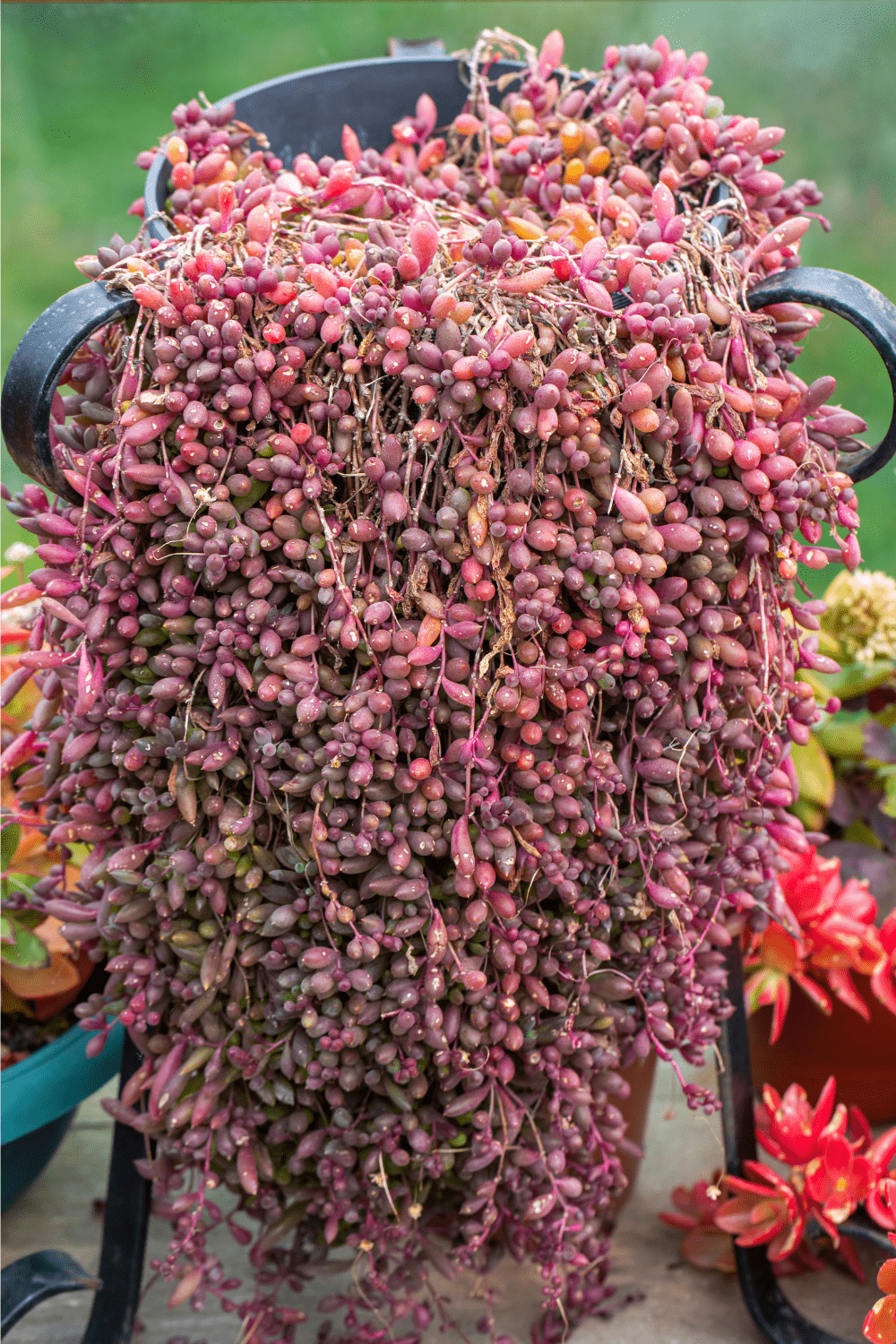
The String of Rubies, also known as Othonna capensis is a trailing succulent plant that has gained popularity in the world of indoor gardening and succulent enthusiasts due to its unique appearance and trailing growth habit. Its distinct bead-like leaves and cascading stems make it a favorite choice for hanging baskets and decorative containers. The succulent’s ability to store water in its fleshy leaves, a characteristic common among succulents, adds to its appeal for those seeking low-maintenance and visually striking plants. Let’s get into some string of rubies plant care!

String of Rubies Plant Characteristics
Native to the sunny plains of South Africa, the Ruby Necklace, also known as the String of Rubies or String of Pickles, belongs to the Asteraceae family. Its name perfectly captures its essence: slender, reddish stems adorned with plump, bean-shaped leaves that transition from green to vibrant shades of ruby red under ample sunlight. These “beads” resemble precious gemstones strung together, creating a cascading necklace effect.
Beyond its captivating looks, the Ruby Necklace possesses a hidden talent – it’s a living mood ring! The intensity of its ruby hues directly reflects the amount of sunlight it receives. Bathed in bright light, the leaves transform into a stunning display of red, while lower light levels result in a more subdued green appearance. This remarkable adaptation allows the plant to optimize its light absorption for efficient photosynthesis.
Caring for this gem is surprisingly simple. As a true succulent, it thrives on neglect. Provide well-draining soil, ample sunlight, and infrequent watering (only when the soil dries completely). Overwatering is its biggest enemy, so err on the side of underwatering.
Here are some key features of the String of Rubies plant:
- Trailing Stems: The String of Rubies is characterized by its trailing or cascading stems, making it an excellent choice for hanging baskets or containers. The stems can grow quite long, creating an elegant and flowing appearance.
- Bean-Shaped Leaves: The small, cylindrical leaves of the String of Rubies resemble tiny beads, giving the plant its unique and appealing appearance. The leaves are succulent and have a fleshy texture.
- Leaf Coloration: The leaves of this succulent are typically green but can develop shades of red or purple, especially when exposed to bright sunlight. The intensity of the coloration can vary based on factors such as light levels and stress conditions.
- Drought Tolerance: Like many succulents, the String of Rubies is adapted to arid conditions and is drought-tolerant. It stores water in its leaves, allowing it to withstand periods of dryness.
- Sunlight Requirements: The plant thrives in bright, indirect sunlight. While it enjoys plenty of light, it’s essential to protect it from intense, direct sunlight, especially during the hottest parts of the day.
- Well-Draining Soil: String of Rubies prefers well-draining soil to prevent waterlogged conditions that can lead to root rot. A cactus or succulent mix is suitable for planting, or you can amend regular potting soil with materials like perlite or sand.
- Temperature Preferences: The plant prefers warm temperatures and should be protected from drafts and extreme temperature fluctuations. It does well in average room temperatures and can tolerate slightly cooler conditions during its dormant period in fall and winter.
- Moderate Humidity: While it is adapted to arid conditions, it generally does well in moderate humidity levels. Ensuring proper ventilation and avoiding overly humid environments are essential for its well-being.
- Seasonal Dormancy: Like many succulents, the String of Rubies goes through a dormant period in fall and winter. During this time, growth slows down, and watering frequency should be reduced.
- Low Maintenance: The String of Rubies is considered a low-maintenance plant, making it suitable for both novice and experienced gardeners. It requires minimal care but benefits from attention to factors such as light, water, and soil.

String of Rubies Plant Care
Light:
The best light for a String of Rubies plant is definitely bright light or indirect sunlight. String of Rubies is a sun-loving succulent so you will want to provide it with the best lighting situation you can!
Here’s the breakdown:
Benefits of bright, indirect sunlight:
- Intensifies the ruby coloration: This is where the plant gets its namesake “rubies.” full sun for several hours a day (ideally 4-6 hours) is crucial for developing and maintaining that beautiful red hue in the leaves.
- Promotes healthy growth: With enough light, your String of Rubies will grow bushier and fuller, preventing leggy stems and sparse foliage.
- Encourages blooming: While not as frequent as in ideal outdoor conditions, bright indirect light can occasionally lead to the production of small yellow flowers.
What to avoid:
- Low light: This will result in greener leaves and potentially leggy growth. The plant might not thrive and reach its full potential.
- Direct sunlight all day: While some direct sun is beneficial, too much light sun can scorch the leaves, especially in sensitive young plants. So after about 4-6 hours of full sunlight provide your ruby necklace succulent with partial shade.
Tips for achieving the best light:
- South-facing window: Ideally, place your String of Rubies near a south-facing window where it receives ample indirect sunlight throughout the day.
- East or west-facing windows: These can also work, but the light intensity might be slightly lower.
- Sheer curtains: Filter harsh midday sun with sheer curtains to prevent scorching.
- Rotate the plant: Regularly rotate your String of Rubies to ensure even growth on all sides.
Remember, even with bright indirect light, some variation in leaf color is natural. The lower leaves might be slightly greener compared to the ones receiving the most light. As long as the overall growth is healthy and the red coloration is present, your String of Rubies is happy! If your home lacks the right conditions for light you can add in a grow light to help!
Soil:
The best soil for your String of Rubies houseplant is all about drainage! This succulent beauty needs soil that allows water to drain quickly to prevent root rot which is its worst enemy.
Here are some soil options:
Pre-mixed options:
- Cactus & Succulent Soil Mixes: This readily available mix from most garden centers is a great starting point. It’s formulated to be well-draining and lightweight, perfect for succulents like your String of Rubies.
- Bonsai Mix: Another good option, as it’s also well-draining and airy. However, check the ingredients list to ensure it doesn’t contain too much organic matter, which can retain moisture.
Make your own soil Mix:
- 2 parts potting soil: Choose a lightweight, well-draining potting mix. Avoid soil for moisture-loving plants.
- 1 part perlite: This volcanic rock provides excellent drainage and aeration.
- 1 part sand: Coarse sand adds drainage and grit, but avoid builder’s sand as it’s too fine and retains too much moisture.
Additional Tips:
- Drainage hole: Ensure your pot has drainage holes to allow excess water to escape.
- Pot size: Choose a pot with drainage holes that’s just slightly larger than the root ball. Don’t go too big, as it can lead to overwatering.
- Fresh soil: When repotting, always use fresh soil to avoid nutrient depletion and potential diseases.
Bonus:
- Activated charcoal: Adding a small amount of activated charcoal to your mix can further improve drainage and help absorb impurities.
- Top dressing: A layer of decorative gravel or pebbles on top of the soil can help retain moisture and prevent soil splash when watering.
Remember, even with the best soil, overwatering remains an issue you need to be aware of. Always water deeply but infrequently, allowing the soil to dry completely between waterings.

Watering:
Watering deeply but infrequently is the key to keeping your String of Rubies happy and healthy. Unlike many other plants, they don’t like to have constantly moist soil, as this can lead to root rot.
Here’s what you need to do:
- Wait until the soil is completely dry before watering. You can check this by sticking your finger into the soil up to the second knuckle. If it feels moist, wait a few more days before watering.
- When you do water, water deeply. Soak the soil thoroughly until water starts to drain out of the drainage holes in the pot. This ensures that all the roots get evenly hydrated.
- Allow the excess water to drain away completely. Don’t let the plant sit in water, as this can lead to root rot.
Here are some additional tips for watering your String of Rubies:
- Use room-temperature water. Cold water can shock the roots.
- Water less often in winter. The plant will be growing more slowly during this time and won’t need as much water.
- Consider the size of your pot and plant. Smaller pots will dry out faster than larger ones, so you may need to water more frequently.
- Pay attention to the leaves. If the leaves are starting to wrinkle or wilt, it’s a sign that the plant needs water.
Temperature:
The String of Rubies thrives in warm temperatures and cannot survive in cold weather.
Here’s a breakdown of the ideal temperature range for your plant:
Daytime:
- Ideal: 65-80°F (18-27°C)
- Acceptable: 60-85°F (15.5-29.5°C)
Nighttime:
- Ideal: 55-65°F (13-18°C)
- Acceptable: 50-60°F (10-15.5°C)
Important points to remember:
- Avoid sudden temperature fluctuations: This can stress the plant.
- Protect from drafts and cold air: Drafts can cause chills and damage the leaves.
- Keep away from heating vents: The hot air can dry out the plant and scorch the leaves.
- Consider using a humidifier if the air is dry: String of Rubies prefers moderate humidity, especially in winter when indoor heating dries the air.
Here’s what happens if the temperature is outside the ideal range:
- Too hot (above 85°F/29.5°C): This can stress the plant, leading to scorched leaves and stunted growth.
- Too cold (below 50°F/10°C): Can damage the roots, stunt growth and potentially kill the plant
Humidity:
Thi is a pretty low-maintenance succulent when it comes to humidity. It doesn’t require special treatment compared to some other houseplants and does well with average household humidity levels, which typically range between 30-50%.
Here’s a breakdown of its humidity needs:
Ideal:
- 40-50% humidity: This provides a comfortable environment for the plant and promotes healthy growth.
Acceptable:
- 30-60% humidity: The plant can tolerate a wider range, but very low or high humidity can have drawbacks.
Lower humidity (below 30%):
- The leaves may become dry and crispy, especially during winter when indoor heating dries the air.
- If you notice this, consider using a humidifier occasionally or grouping your String of Rubies with other humidity-loving plants to create a microclimate.
Higher humidity (above 60%):
- While the plant can technically tolerate it, prolonged periods of high humidity can increase the risk of fungal diseases.
- Ensure good air circulation around the plant, especially if humidity levels are consistently high.
Remember, these are just guidelines. Observe your plant and adjust humidity levels as needed. If you see signs of dryness (crispy leaves) or fungal issues (moldy growth), take action to bring the humidity level back to the ideal range.
Here are some additional tips for managing humidity for your String of Rubies:
- Use a pebble tray: Place a tray filled with pebbles and water under the pot. As the water evaporates, it raises the humidity around the plant.
- Group plants together: Plants naturally increase humidity around each other.
- Mist occasionally: This can be helpful in dry conditions, but avoid misting directly on the leaves, as it can encourage fungal growth.
- Invest in a humidifier: Use a humidifier to raise the overall humidity level in your home, especially during winter.

Fertilizing:
This succulent isn’t a heavy feeder and doesn’t require frequent fertilization. In fact, over fertilizing can potentially harm the plant, so it’s best to err on the side of caution.
When to fertilize:
- Spring and summer months: During the active growing season (roughly March to September), you can fertilize once a month at most.
- Fall and winter: Avoid fertilizing during these dormant periods. The plant isn’t actively growing and doesn’t need the extra nutrients.
What to use:
- Balanced liquid fertilizer: Choose a fertilizer with equal parts nitrogen, phosphorus, and potassium (e.g., 10-10-10). Avoid fertilizers high in nitrogen, as this can promote leggy growth.
- Dilution: Always dilute the fertilizer to half-strength according to the manufacturer’s instructions. Never apply fertilizer directly to the soil at full strength.
How to apply:
- Water the plant thoroughly before fertilizing: This helps prevent root burn.
- Dilute the fertilizer and apply it to the soil according to the instructions. Avoid pouring it directly on the leaves or stem.
- After fertilizing, flush the soil with clean water to remove any excess fertilizer.
Additional tips:
- Less is more: It’s better to underfertilize than overfertilize. If you’re unsure, skip fertilizing altogether.
- Consider organic fertilizers: If you prefer a more natural approach, you can use organic fertilizers like compost tea or fish emulsion. Dilute them even more than synthetic fertilizers and apply them less frequently.
- Monitor your plant: Observe your String of Rubies for any signs of fertilizer burn, such as yellowing or browning leaves. If you see any, stop fertilizing immediately and flush the soil with water.
Remember, a healthy String of Rubies doesn’t necessarily need fertilizer to thrive. With proper light, water, and soil, it can flourish without additional nutrients. So, be mindful of its needs and fertilize cautiously to avoid harming this beautiful succulent.
Pruning:
Pruning your String of Rubies (Othonna capensis) is a great way to encourage bushier growth, maintain its shape, and remove any unwanted or damaged parts.
When to prune:
- Best timing: Prune during the active growing season, ideally in spring or summer. Avoid pruning in fall or winter when the plant is dormant.
- Reasons for pruning:
- Remove leggy stems that disrupt the plant’s shape.
- Pinch off dead or damaged leaves for aesthetics and to prevent disease spread.
- Control the overall size and encourage branching for a fuller appearance.
- Harvest stem cuttings for propagation.
Pruning techniques:
- Use sharp, sterilized tools: Pruning shears or scissors work well. Sterilize them with rubbing alcohol to prevent spreading diseases.
- Make clean cuts: Aim to cut just above a leaf node (the bumps where new leaves emerge) at a 45-degree angle. This encourages new growth at the cut point.
- Start small: Don’t prune more than ⅓ of the plant’s total volume at once. Begin with removing the most obvious leggy stems or damaged leaves.
- Pinch or snip: For small adjustments, simply pinch off unwanted leaves or snip short sections of stems.
- Larger cuts: For thicker stems, make clean cuts and consider sealing the wound with a dab of fungicide to prevent infection, especially on larger cuts.
Additional tips:
- Pinch off flower buds if desired: While some find the small yellow flowers charming, you can pinch them off to promote more foliage growth.
- Encourage bushier growth: After pruning, provide enough bright, indirect sunlight and proper watering to stimulate new growth.
- Use pruned stems for propagation: Stick healthy stem cuttings in well-draining soil to create new plants.
Remember:
- Pruning is optional, but it can enhance the aesthetics and health of your String of Rubies.
- Don’t be afraid to experiment and find a shape that suits your preference.
- Always prioritize the plant’s health and avoid excessive pruning.

Repotting:
The String of Rubies is a relatively slow-growing succulent that doesn’t require frequent repotting.
When to repot:
- Rootbound: The most common reason is when the roots outgrow the current pot. Signs include roots pushing through drainage holes, the plant seems top-heavy, or growth slows down significantly.
- Soil quality: If the soil has become compacted or depleted of nutrients, repotting can refresh the environment for healthy growth.
- New pot desired: If you want to move your String of Rubies to a different pot for aesthetic reasons, choose one just slightly larger than the current one.
Frequency:
- Generally, repotting every 2-3 years is sufficient. Young plants might need it more often (every 1-2 years) as they grow faster.
Steps for repotting:
- Prepare: Choose a larger pot with drainage holes. Choose one slightly larger than the current one. Use a well-draining succulent mix or create your own with potting soil, perlite, and sand. Gather clean tools and gloves.
- Water sparingly: Water the plant lightly a day before repotting to make the soil easier to handle.
- Remove the plant: Gently loosen the soil around the root ball and carefully tip the plant out of its pot.
- Inspect the roots: Remove any brown or mushy roots with sterile shears.
- Prepare the new pot: Add fresh soil mix to the bottom of the pot, enough to elevate the root ball to the desired height.
- Position the plant: Place the String of Rubies in the new pot and fill in the gaps with more soil mix, gently firming it around the base.
- Water lightly: Water moderately to settle the soil and avoid air pockets. Don’t overwater at this stage.
- Place in indirect sunlight: Avoid direct sun for a few days until the plant recovers from repotting stress.
Additional tips:
- Use a pot material like terracotta that allows good drainage and air circulation.
- Don’t repot immediately after purchasing a new plant. Let it adjust to its new environment for a while.
- Water according to the new pot size and avoid overwatering, especially initially.
- Repotting is a good opportunity to propagate your String of Rubies by taking stem cuttings.
By following these guidelines, you can ensure a smooth repotting experience for your String of Rubies and help it thrive in its new home!

Common Problems
While the String of Rubies plant is a fairly resilient succulent, it can still be susceptible to some pests and issues.
Here’s a rundown of the most common ones:
Pests:
- Mealybugs: These small, white, cottony insects suck sap from leaves and stems. Look for them clustered around leaf nodes and undersides. Treat with insecticidal soap, neem oil, or rubbing alcohol on a cotton swab.
- Scale insects: These hard-shelled insects attach themselves to stems and leaves, draining sap. Scrape them off with a fingernail or treat them with insecticidal soap or neem oil.
- Spider mites: These tiny mites cause webbing on leaves and suck sap, leading to yellowing and leaf drop. Increase humidity and treat with insecticidal soap or neem oil.
Diseases:
- Root rot: This fungal disease is caused by overwatering. Symptoms include wilting, yellowing leaves, and mushy roots. Repot in fresh, well-draining soil and improve drainage.
- Fungal diseases: Overwatering or poor ventilation can lead to fungal infections like powdery mildew or botrytis. Treat with fungicide and improve air circulation.
Other issues:
- Leggy growth: Lack of light can cause your String of Rubies to stretch with sparse leaves. Move it to brighter indirect light and consider pruning leggy stems.
- Brown or yellow leaves: This can be due to underwatering, overwatering, lack of nutrients, or sun scorch. Adjust your watering habits, fertilize lightly, and move the plant away from direct sun if necessary.
- Leaf drop: While some leaf drop is natural, excessive loss can indicate stress from various factors like temperature extremes, drafts, or nutrient deficiency. Address the potential cause.
Prevention is key:
- Provide proper light, water, and drainage.
- Avoid overwatering and maintain good air circulation.
- Regularly inspect your plant for signs of pests or diseases.
- Quarantine new plants before introducing them to your collection.
Growing the string of rubies plant involves providing well-draining soil, ample sunlight, and a careful balance of watering to mimic its native arid conditions. As a low-maintenance succulent, it is well-suited for both novice and experienced gardeners. Its cascading growth habit makes it an excellent choice for hanging baskets or containers, allowing its distinctive foliage to create a visually striking display. Whether gracing window sills, balconies, or garden landscapes, the string of rubies plant rewards growers with a resilient and aesthetically pleasing addition to their botanical collections.
One response to “String of Rubies Plant Care Guide”
Leave a Reply

Nestera Chicken Coop

Park Seed
Garden Tower Project
Vego Garden Beds

Botanical Interests
Amazon Favorites!

Hoselink
Web Stories


[…] popular in the world of indoor gardening, the String of Rubies features slender, cylindrical leaves like tiny pickles strung along reddish stems. Furthermore, its […]